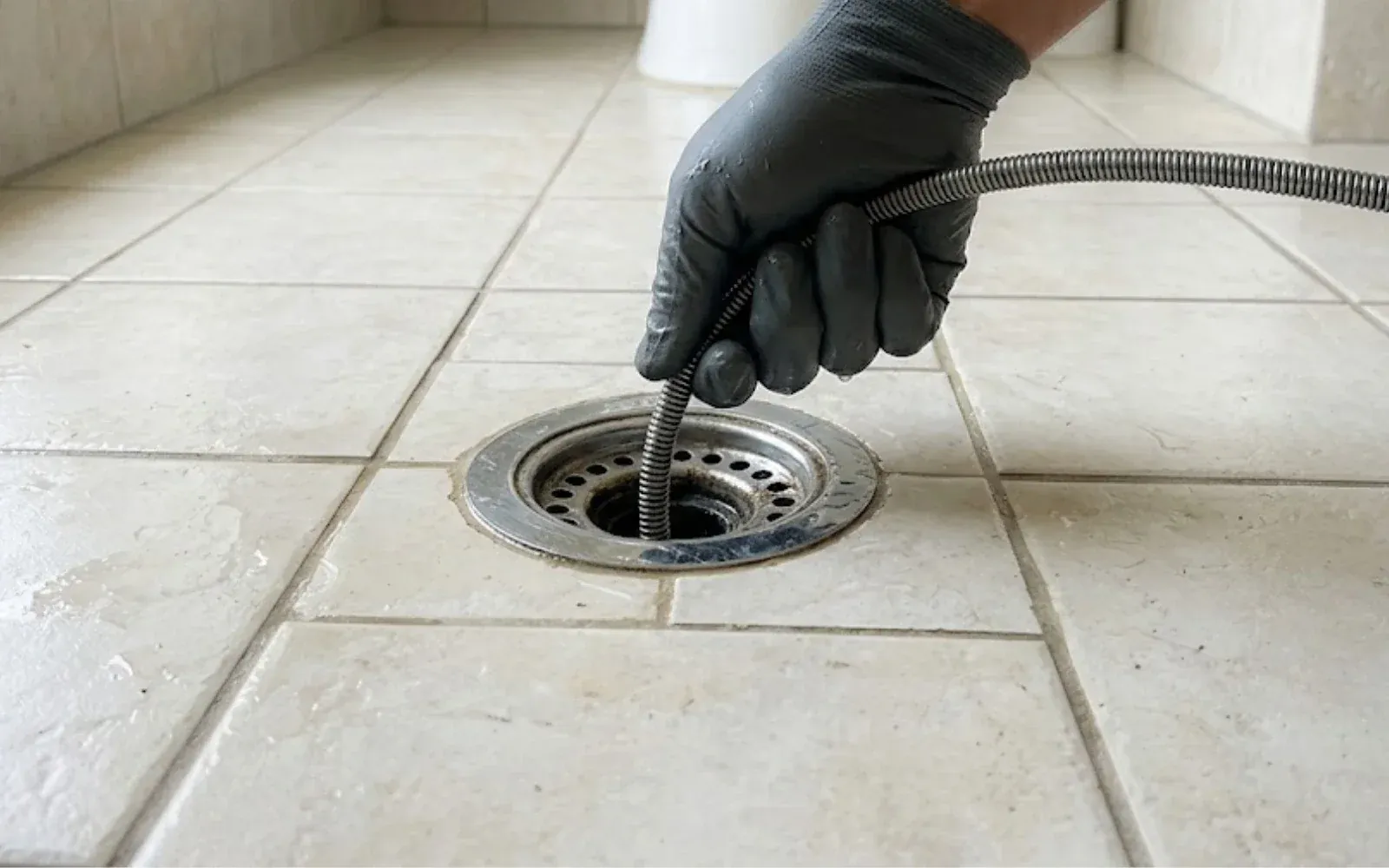
Sign One: Water Drains Slowly
A sink that takes longer to empty than it used to is the first warning. Hair, soap scum and grease narrow the pipe, and each layer holds the next. At first it only affects one fixture. Left alone, the narrow spot closes.
Try a plunger on a bathroom sink or tub, with the overflow opening blocked by a wet rag. Pull out any hair from the stopper with a plastic drain tool. If the water still drains slowly afterward, the buildup is deeper in the line.
Sign Two: Gurgling Sounds
Gurgling means air is being pulled through water in the trap, usually because the drain line is partly blocked or the vent is restricted. A toilet that gurgles when the shower drains points to a shared line that is clogged beyond the fixture.
A single gurgle is nothing. A pattern, especially at several fixtures, means the main line is starting to fill. At that point a cable at the cleanout is cheaper than waiting for a backup.
Sign Three: Smells That Come and Go
Rotten-egg or sewage smells from a drain point to trapped debris breaking down, a dry trap or a vent problem. Run water in rarely used drains to refill the trap. If the smell stays, something is decaying in the line.
A strong sewage smell in the yard near the cleanout is a warning that the main line is leaking or full. Call a plumber rather than guessing.
Sign Four: Multiple Fixtures Affected
- The tub bubbles when the toilet flushes.
- The washing machine drains into the floor drain and it rises.
- Two or more sinks drain slowly at once.
- Water backs up in the lowest drain in the house when upstairs fixtures run.
Several fixtures acting up together means the problem is in the shared branch or the main line. That is the point at which cleaning moves from optional to urgent. Our drain cleaning service handles both single fixtures and main lines.
Slow Drain Getting Worse?
Call and describe the signs. A plumber can tell you whether it is a quick clear or a deeper issue.
Sign Five: Fruit Flies and Drain Flies
Small flies hovering near a drain breed in the slime that coats a dirty pipe. They are a sign of organic buildup. Killing flies without cleaning the pipe only fixes the symptom. A thorough cleaning or hot-water flush removes their food.
Sign Six: Repeated Clogs
If you plunge the same drain every month, a blockage is rebuilding on a rough or damaged pipe wall. A cable opens a hole, but the wall stays dirty. That is when hydro jetting after a camera check is worth pricing.
| What you notice | What it usually means | What to do |
|---|---|---|
| One slow sink | Buildup in the trap or arm | Plunge, clean the stopper, then call if it persists |
| Gurgling at several fixtures | Partial main line blockage | Call for a cable |
| Sewage smell outdoors | Full or leaking line | Call soon |
| Drain flies | Slime in the pipe | Clean the pipe, not just the flies |
| Clogs every few weeks | Rough pipe, roots or a sag | Camera check |
Moncks Corner Notes
Moncks Corner gets about 52 inches of rain a year and sits only about 33 feet above sea level, so the ground stays damp and roots reach for pipe joints. A drain that slows after a week of storms may be a root problem, not a hair problem.
The town also has a mix of older downtown houses and fast-built newer neighborhoods. Their pipes fail in different ways. Older clay and cast iron roughen and crack, while newer PVC clogs mostly from what goes down it.
Habits That Prevent Clogs
- Wipe grease from pans into the trash, not the sink.
- Use a hair catcher in every shower and tub.
- Flush only toilet paper.
- Run hot water for 30 seconds after washing dishes.
- Schedule a main line cleaning if you have old pipe or large trees.
When to Call a Plumber
Call when plunging fails, when more than one fixture is affected, when sewage appears or when a clog returns. Our 24/7 line answers at any hour. If you live in Goose Creek or nearby, the Goose Creek plumbing page shows how to reach us there.
Avoid chemical openers. They can harm older pipe, and they leave caustic water in the trap for the plumber to handle. A cable or a jet clears the blockage without the chemicals.
What You Can Try Before You Call
For a slow bathroom sink, remove the stopper, pull out the hair and rinse it. Run hot water for a minute. A plunger with the overflow blocked can free a partial clog. For a slow kitchen sink, remove the trap beneath it into a bucket and clean the trap arm. Reassemble hand-tight and run water to check for leaks.
These steps help with local buildup. They will not help with a main line problem. If more than one fixture is affected, skip the home remedies and call.
How Often to Schedule Maintenance
There is no single schedule. A home with mature trees and older pipe may need a main line cleaning every year or two. A newer home with PVC and no trees may never need one. A camera check shows the actual condition and sets a schedule that matches the pipe.
A Simple Monthly Habit
Once a month, run hot water in every rarely used drain, such as a guest bath or a basement floor drain. This refills the trap, which blocks sewer gas, and it flushes light buildup. It takes five minutes and keeps small problems from turning into smells.
Standards and Sources
The International Plumbing Code (IPC) requires every fixture to have a trap and a vent, which is why gurgling is a clue about a partial blockage or a vent problem.
Clogged Drain Warning Signs Questions
There is no fixed interval. Homes with old pipe, large trees or heavy grease use may benefit from a main line cleaning every year or two. Others only need cleaning when signs appear.
Not by itself. Several fixtures backing up or sewage appearing is.
They can help with light organic buildup, but they will not clear a real blockage.
Hair and soap decaying in the trap or arm is the usual cause. Cleaning the stopper and flushing the drain often helps.
Yes. Roots enter joints looking for moisture and trap paper and grease. A camera shows them.
That is usually a local clog in the trap or branch, quicker and cheaper to clear.