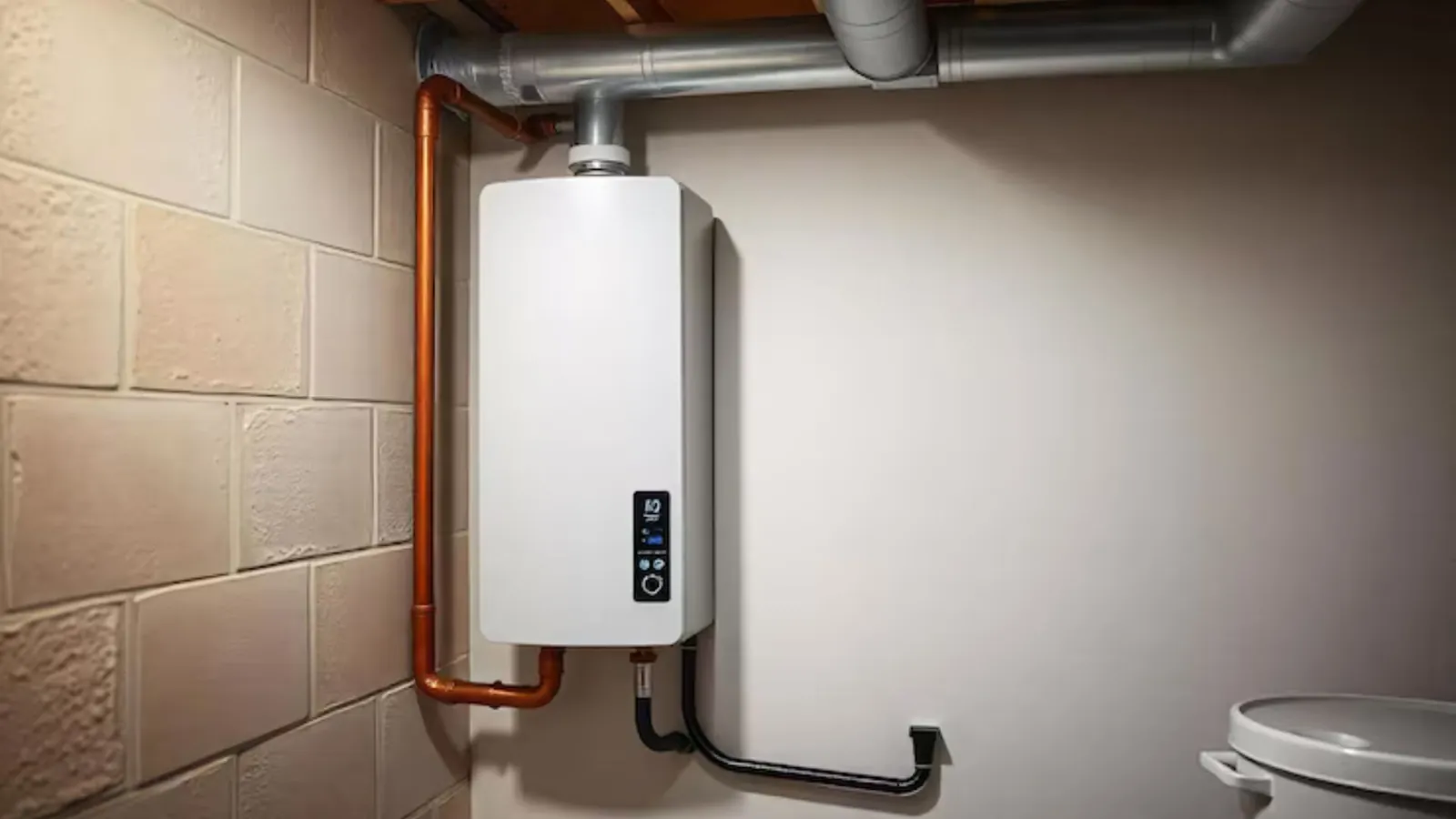
How a Gas Tankless Water Heater Works
When you open a hot tap, a flow sensor tells the unit to light a burner. Cold water passes through a heat exchanger, takes up heat from the flame and leaves hot. When you close the tap, the burner shuts off. There is no stored tank to keep warm, so there is no standby loss from a tank.
The trade-off is that the burner is large. A typical tank burner is modest because it has hours to heat the water. A tankless unit has to heat water in seconds, so its burner draws a lot of gas at once. That one fact drives almost every installation question.
Check the Gas Line First
Most homes with a gas tank heater have a gas line sized for that tank, plus a furnace and a range. Adding a tankless unit can overload that line. The plumber measures the pipe diameter and length, adds up the appliances on it and checks whether the pressure holds when everything runs together.
If the pipe is too small, it must be upsized from the meter or the manifold. That can cost more than the unit itself, so ask about it before you choose a model. If your home uses propane instead of natural gas, tell the plumber, because the burner setup and tank supply differ.
Venting Is Not Optional
Gas burners produce exhaust that must leave the house. Many gas tankless units use a sealed, direct-vent design with stainless or PVC pipe that runs through a wall or the roof. The vent path, the clearance from windows and the length of the run are set by the manufacturer's instructions and by local code.
- Short, straight runs work best. Every elbow adds resistance.
- Exterior wall terminations must keep clear of windows, doors and air intakes.
- Condensing models make acidic condensate that needs a drain.
- An existing tank vent is often the wrong size or material and cannot be reused.
A poor vent causes error codes, nuisance shutdowns and, in the worst case, exhaust gases entering the house. Carbon monoxide alarms on every level are cheap protection, and a plumber can show you where they belong.
Flow Rate: Size the Unit for Your Household
Tankless units are rated in gallons per minute at a given temperature rise. The rise is the difference between the cold water coming in and the hot water you want. Colder incoming water means a higher rise, which lowers the flow the unit can deliver.
| Fixture | Typical flow |
|---|---|
| Shower | About 2 gallons per minute |
| Bathroom sink | About 1 gallon per minute |
| Kitchen sink | About 1.5 gallons per minute |
| Dishwasher | About 1.5 gallons per minute |
| Washing machine | About 2 gallons per minute |
Add up what you run together. Two showers and a dishwasher need roughly 5.5 gallons per minute. If your household rarely runs that much at once, a smaller unit is fine. If it does, either size up or plan for a second unit.
Tankless Questions?
Call and describe your home. A plumber can explain what a gas tankless unit would need.
Tank or Tankless: Which Fits Which Home
A tankless unit fits when
- You plan to stay in the home for years
- You want to free up closet or garage space
- Your gas line and vent route can be upgraded
- You run hot water in short bursts all day
A tank still makes sense when
- The gas line or vent is hard to change
- Upfront cost matters most
- You use a lot of hot water at once for long periods
- You want the simplest, most familiar equipment
If a tank has just failed and you are weighing options, see our page on water heater replacement for the full comparison. If your plan is a new tankless unit, tankless water heater service explains what we install and flush.
Moncks Corner Notes
Moncks Corner sits only about 33 feet above sea level beside the West Branch of the Cooper River, and the town gets about 52 inches of rain a year. In practice, that means garages and utility closets stay humid for months. Humidity attacks vent fittings and the outside of the unit, so ask for corrosion-resistant vent material and a sealed install.
The town has grown quickly, and its water comes from local systems that publish annual quality reports. We do not quote a hardness number from memory. Read your utility's report or use a test strip, because mineral level decides how often a gas tankless unit needs flushing.
Upkeep: The Yearly Flush
Minerals build up inside the heat exchanger and restrict flow. A yearly flush with a descaling solution is the standard maintenance, and it works best if the unit has isolation valves installed. Without them, a flush is harder, and many owners skip it, which is why units fail early.
Clean the inlet water filter screen each year as well. A clogged screen lowers flow and triggers error codes. Keep the area around the unit clear of boxes, since the unit needs air.
Cost Factors, Not Guesses
A tankless install price depends on the unit, the gas line work, the vent run, any electrical outlet or condensate drain, and whether a permit is needed. Ask the Town of Moncks Corner Building Department whether your project needs one, since rules vary. A reliable quote lists each of these items instead of a single number.
Homes in the Goose Creek area face the same decisions. If you live there, our Goose Creek emergency plumbing page covers the service area and what to do if your heater fails after hours.
What to Do Before You Call
- Note the brand and model of your current heater.
- Photograph the gas meter, the manifold and the location where you want the unit.
- Count the bathrooms and the largest hot-water use at one time.
- Check whether the unit will vent to an outside wall or the roof.
Standards and Sources
Gas tankless installs follow the manufacturer's venting instructions and the National Fuel Gas Code (NFPA 54). The U.S. Department of Energy suggests 120 degrees Fahrenheit as a starting temperature to limit scalding.
Gas Tankless Water Heater Questions
Often yes. Tankless burners draw much more gas at once than a tank burner, so the existing line may need upsizing. The plumber measures the pipe and calculates the load before quoting.
Usually not. Tank vents are often the wrong size or material for a tankless unit. Direct-vent models use their own pipe through a wall or roof.
It heats continuously, but each unit has a maximum flow. Running more fixtures than the rating allows lowers the temperature.
Many manufacturers recommend an annual flush and filter clean. Hard water means more often. Check your owner's manual.
When installed and vented correctly, yes. Put carbon monoxide alarms on every level and have the unit inspected if you smell gas or see error codes about venting.
We serve the Goose Creek area too. The same questions about gas line, vent and flow apply there.